
Big questions. Tiny molecules.
Peptides Explained
Like We’re Down the Pub

Meet the characters. Pick a peptide. Let’s see what the science actually says.
Find your peptidePeptides 10140 guides. Real studies. Occasional nonsense.
Explore individual compounds and blends

AOD-9604
Growth hormone does lots of things. AOD-9604 was the attempt to nick just the bit people hoped would help with fat loss and leave the growth bit behind.
Human obesity evidence unconvincingRead the guide
ARA-290 / Cibinetide
ARA-290, also called cibinetide, came from an interesting observation about erythropoietin: part of that molecule appears to be involved in tissue-protection signalling without needing to make more red blood cells.
Small condition-specific human trialRead the guide
Argireline
Argireline - acetyl hexapeptide-8 - is a cosmetic peptide usually found in creams and serums for expression lines. The idea is that it interferes with part of the signalling machinery nerves use to tell facial muscles to contract.
Small topical human trialRead the guide
BPC-157
BPC-157 is the peptide that arrives online wearing a hard hat and carrying twelve before-and-after photos of tendons.
Limited human evidenceRead the guide
BPC-157 + TB-500
This blend is basically peptide DIY: take two compounds people already associate with repair and put them in the same van. BPC-157 is discussed around tissue repair and blood-vessel signalling.
Combination evidence not establishedRead the guide
Cagrilintide
Cagrilintide works on a different appetite system from the famous GLP-1 drugs. It is a long-acting analogue of amylin, a hormone normally released alongside insulin after you eat.
Human weight-management trialRead the guide
Cerebrolysin
Cerebrolysin is not one neat little peptide. It is a mixture of small peptides and amino acids produced from porcine brain tissue.
Condition-specific trials · mixed evidenceRead the guide
CJC-1295
CJC-1295 is built around GHRH - the signal the brain uses to tell the pituitary to release growth hormone. So rather than injecting growth hormone itself, the idea is to ring headquarters and ask the body to send some of its own.
Exact compound mattersRead the guide
CJC-1295 + Ipamorelin
This blend tries to stimulate growth-hormone release from two different directions. CJC-type GHRH signalling presses the pituitary's GHRH receptor. Ipamorelin presses the ghrelin or growth-hormone-secretagogue receptor.
Combination evidence not establishedRead the guide
DSIP
DSIP stands for Delta Sleep-Inducing Peptide, which is an extraordinarily bold name for something whose sleep evidence is actually rather complicated.
Small human studies · mixed findingsRead the guide
Eloralintide
Eloralintide, also known as LY3841136, is an investigational amylin-receptor agonist being studied for obesity. Amylin is one of the body's natural 'we have eaten, thank you' signals.
Phase 2 human trial · investigationalRead the guide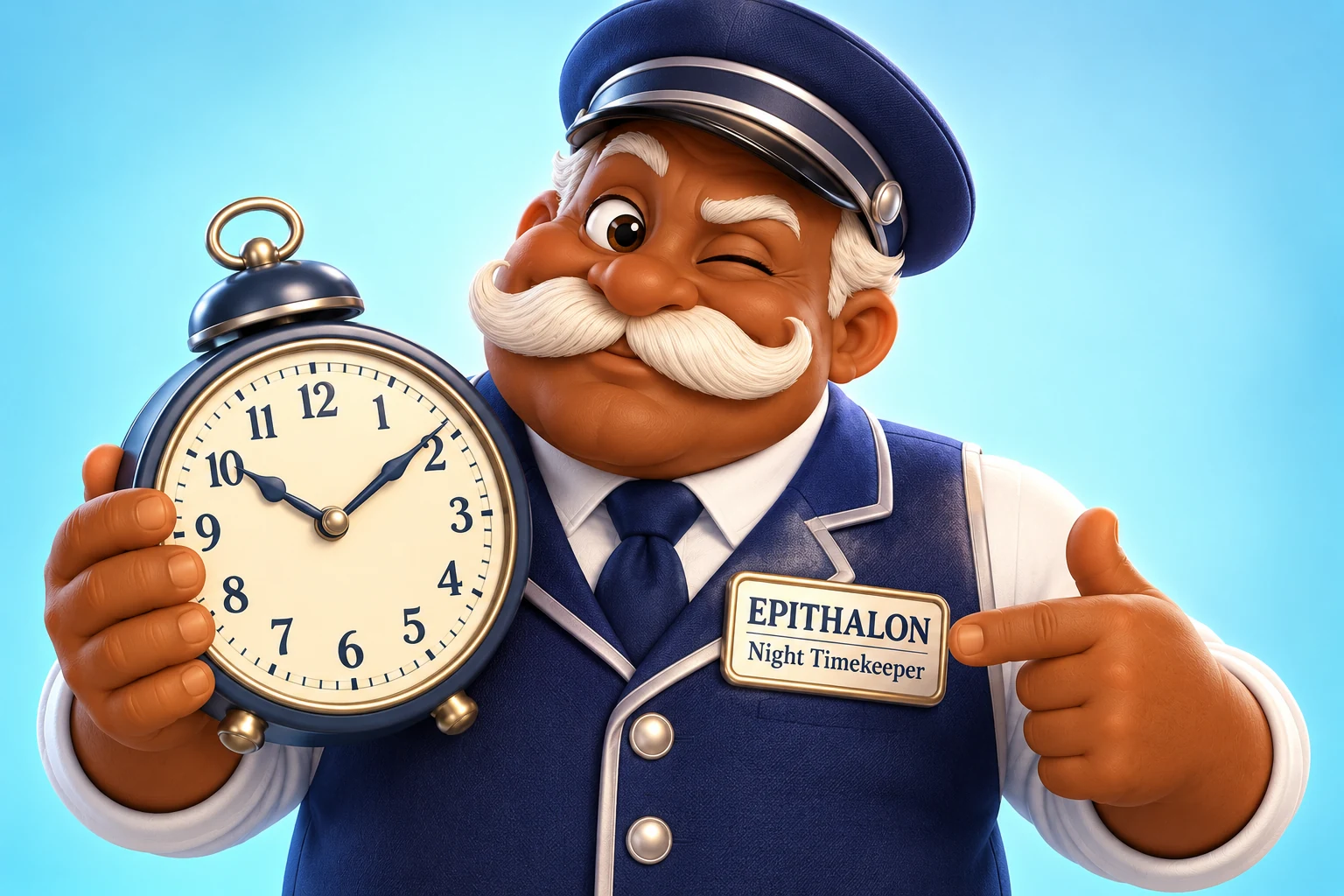
Epithalon / Epitalon
Epithalon - usually the synthetic tetrapeptide Ala-Glu-Asp-Gly - has become famous in longevity circles because of research involving telomerase, telomeres and ageing-related biology.
Cell-culture evidenceRead the guide
GHK-Cu
GHK-Cu is a naturally occurring three-amino-acid peptide that binds copper. Think of it as a tiny restoration specialist who refuses to work unless he has brought his own copper toolbox.
Mechanistic evidence · route mattersRead the guide
GHRP-2
GHRP-2 is a growth-hormone-releasing peptide that activates the ghrelin or growth-hormone-secretagogue receptor, GHS-R1a.
Small human physiological studiesRead the guide
GHRP-6
GHRP-6 also activates the ghrelin receptor and can produce a strong growth-hormone response. But there is a wonderfully inconvenient extra feature: ghrelin signalling is tied to hunger. So GHRP-6 can make the appetite department wake up as well.
Human hormone-response researchRead the guide
GLOW
GLOW combines GHK-Cu, BPC-157 and TB-500 - essentially three compounds that have each acquired reputations around repair, skin or tissue recovery. GHK-Cu is the restoration specialist with the copper toolbox.
Combination evidence not establishedRead the guide
Ipamorelin
Ipamorelin is a selective agonist of the ghrelin or growth-hormone-secretagogue receptor. In plain English, it presses a receptor that tells the pituitary to release growth hormone.
Human trial · different indicationRead the guide
Kisspeptin-10
Kisspeptin-10 is a short piece of kisspeptin that activates the KISS1 receptor - one of the important upstream switches controlling human reproduction.
Small human hormone studiesRead the guide
KLOW
KLOW combines GHK-Cu, BPC-157, TB-500 and KPV. In website language: skin, repair and inflammatory-signalling interests all squeezed into one blend.
Combination evidence not establishedRead the guide
KPV
KPV is only three amino acids long - lysine, proline and valine - and comes from the tail end of alpha-MSH, a much larger signalling peptide.
Cell and animal researchRead the guide
LL-37
LL-37 is one of the body's own host-defence peptides. It is part of the cathelicidin system and can interact with microbes, immune signalling and wound-healing biology.
Topical human trials · mixed findingsRead the guide
Mazdutide
Mazdutide is a dual agonist: it activates both GLP-1 and glucagon receptors. GLP-1 helps reduce appetite, increase satiety and improve glucose-dependent insulin signalling.
Phase 3 human trialRead the guide
MOTS-c
MOTS-c is unusual because it is a mitochondrial-derived peptide - essentially a message linked to the little energy-producing structures inside our cells.
Primarily preclinicalRead the guide
MT-2 / Melanotan II
Melanotan II is a synthetic melanocortin agonist. The headline effect is tanning because melanocortin signalling - especially through MC1 receptors in skin - encourages melanin production.
Safety and product-quality concernsRead the guide
NAD+
NAD+ is not actually a peptide. It is a coenzyme that cells use constantly in energy metabolism and redox reactions, and it also feeds enzymes involved in DNA repair and cellular signalling.
Small human metabolism studyRead the guide
Oxytocin
Oxytocin is usually introduced as the 'cuddle hormone,' which is a bit like introducing the Prime Minister as someone who owns a kettle.
Established clinical uses · mixed wellness researchRead the guide
Pinealon
Pinealon is the tiny tripeptide Glu-Asp-Arg, often shortened to EDR. It appears in discussions about brain ageing, memory and protection from cellular stress.
Early preclinical researchRead the guide
PT-141 / Bremelanotide
Most erection drugs work from the waist down: they improve blood flow and get the equipment ready for action. They can't make you fancy the action. And, obviously, that doesn't solve much for women either.
Specific US medicine indicationRead the guide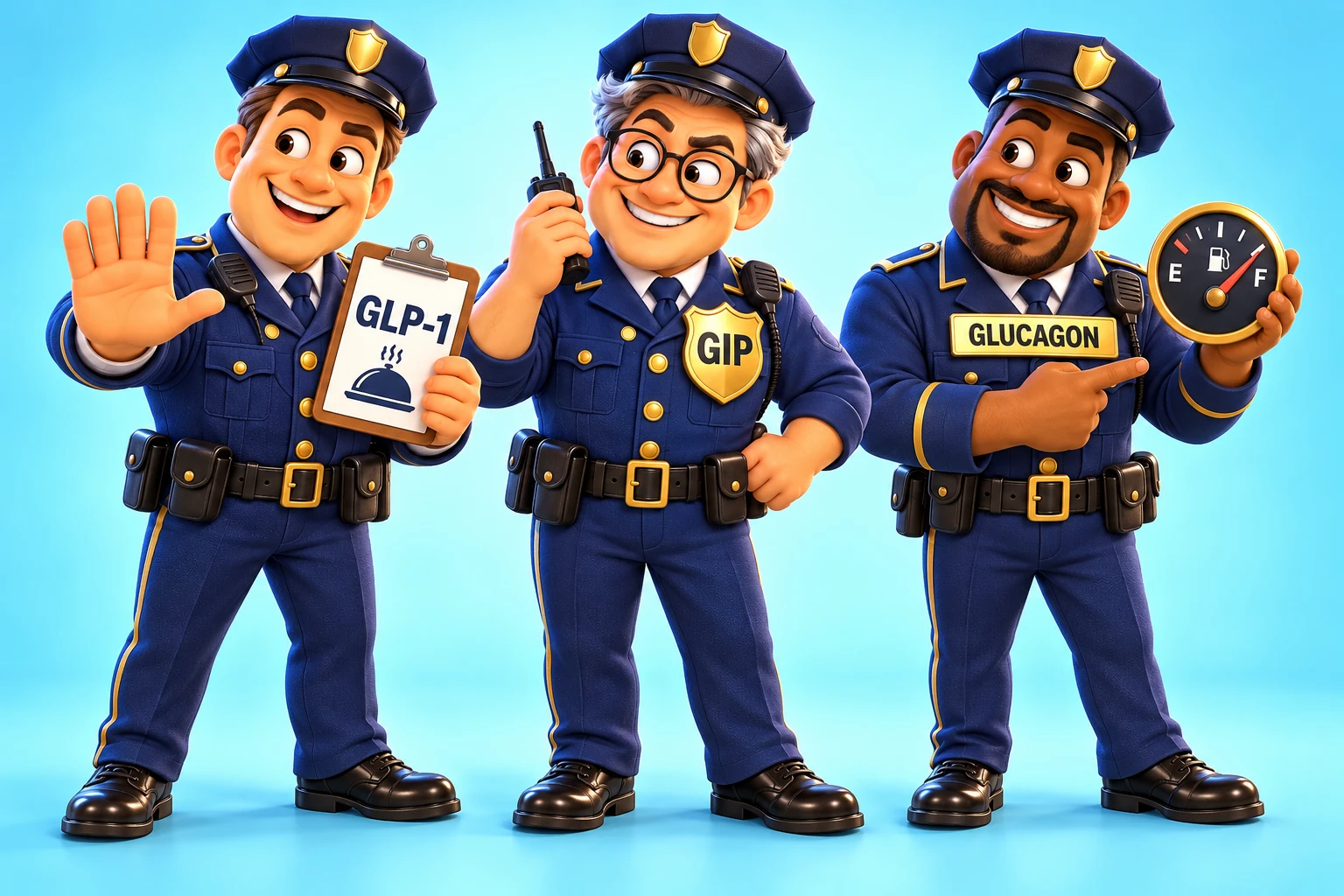
Retatrutide
Most weight-loss drugs are content to knock on one or two metabolic doors. Retatrutide appears to have arrived with the master key. It is an investigational triple agonist activating GLP-1, GIP and glucagon receptors.
Human trials · investigationalRead the guide
Selank
Selank is a synthetic peptide related to tuftsin and is usually discussed for anxiety, stress and calmer concentration.
Limited human researchRead the guide
Semaglutide
Semaglutide is a GLP-1 receptor agonist. It mimics one of the body's meal-related signals and changes both appetite and glucose regulation.
Large human trialsRead the guide
Semax
Semax is a synthetic peptide developed from a fragment of ACTH and is discussed for attention, memory and neurological recovery.
Limited condition-specific human researchRead the guide
Sermorelin
Sermorelin is essentially the active 1-29 portion of GHRH - the natural hormone that tells the pituitary to release growth hormone. That makes its approach rather elegant.
Clinical history · indication mattersRead the guide
SLU-PP-332
First, the important bit: SLU-PP-332 is not a peptide. It is a small experimental molecule that activates estrogen-related receptors - ERRs - involved in cellular energy metabolism.
Cell and animal researchRead the guide
SNAP-8
SNAP-8 - acetyl octapeptide-3 - is a topical cosmetic peptide aimed at expression lines.
Topical cosmetic · manufacturer evidenceRead the guide
SS-31 / Elamipretide
SS-31, or elamipretide, is a mitochondria-targeting tetrapeptide. It is designed to accumulate around the inner mitochondrial membrane and interact with cardiolipin - a lipid that helps the cell's energy machinery stay organised.
Specific US medicine approvalRead the guide
TB-500
TB-500 is discussed as a repair peptide connected with thymosin beta-4, a naturally occurring protein involved in actin, cell movement and wound-healing biology.
Compound identity mattersRead the guide
Tesamorelin
Tesamorelin is a GHRH analogue. It activates the GHRH receptor, which tells the pituitary to release growth hormone and raises downstream IGF-1 signalling.
Human trials · specific conditionRead the guide
Thymosin Alpha-1
Thymosin Alpha-1, also called thymalfasin, is a 28-amino-acid peptide studied for immune regulation. It interacts with several parts of immune signalling, including dendritic cells, T-cell responses and innate immune pathways.
Condition-specific human trialsRead the guide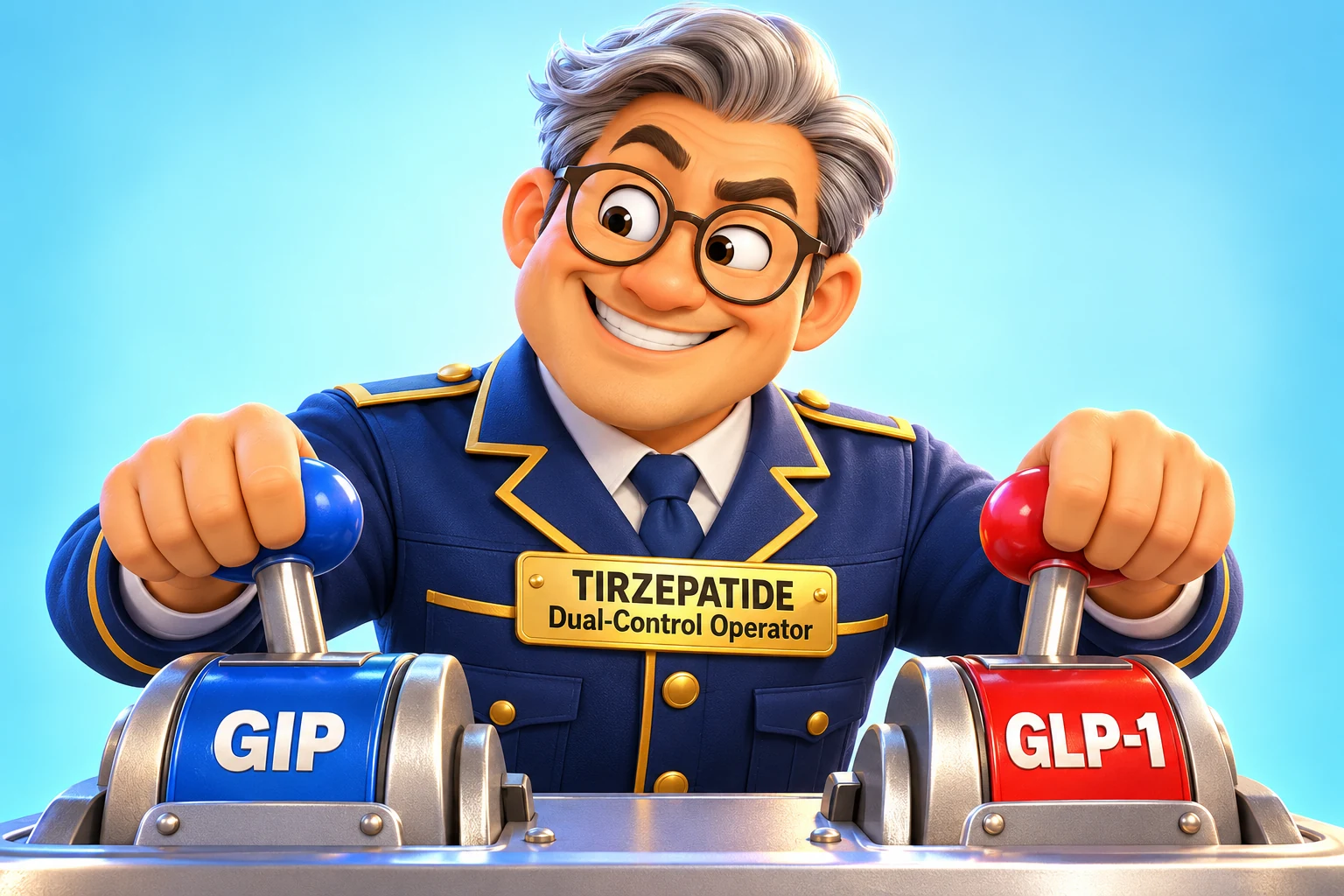
Tirzepatide
Tirzepatide activates two receptors: GIP and GLP-1. GLP-1 helps reduce appetite, increase fullness and improve glucose-dependent insulin control. GIP adds another nutrient-related signal that works alongside it.
Large human trialsRead the guideNAD+ is a coenzyme; SLU-PP-332 is a small molecule. Characters illustrate research themes, not proven benefits.